How Often to Feed Lawnmower Blenny
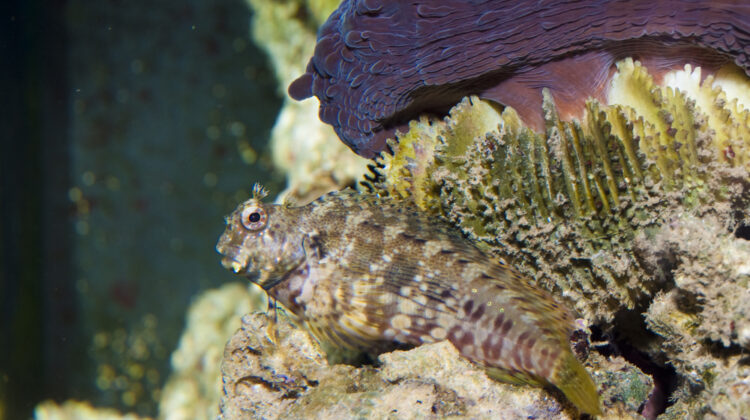
The Lawnmower Blenny is a popular fish and a common site in many aquariums because they make the perfect clean-up crew. As their name suggests, they love to cut back the hair algae that grows on the bottom of their tank.
What it lacks in good looks, it makes up for in personality. These fascinating fish are great for aquarium newbies looking to keep their tank clean without too much fuss. Here is our complete guide to caring for a Lawnmower Blenny.
Quick Stats About the Lawnmower Blenny
The Lawnmower Blenny is a curious fish that adds a little something extra to your tank. Below are some quick facts about this endearing fish.
- Scientific Name – Salarias fasciatus
- Family Name – Blenniidae
- Other Names – Algae Blenny, Jewelled Rockskipper Blenny, Rock Blenny
- Care Level – Easy to moderate
- Life Span – 2 to 4 years
- Common Colors – Brown, beige, cream, and green
- Size – 4-6 inches
- Origin – Indo-Pacific, Red Sea, Great Barrier Reef
- Diet – Herbivore
- Min Tank Size – between 30 – 40 gallons
- pH – 8.2 – 8.4
- Temperature – 70°F – 82°F
- Specific Gravity – 1.020 – 1.025
- Carbonate Hardness (dKH) – 8 – 12°
- Compatibility – Peaceful community
Lawnmower Blenny Overview
The Lawnmower Blenny, or Jewelled Rockskipper Blenny, is easy to care for and fun to watch. They are one of 13 species in the Salaries genus and part of the Blenniidae family.
These intriguing cleaners of the deep come from the Indian Ocean around the East African coast. They also live in the Great Barrier Reef, Samoa, and the Red Sea. They prefer shallow reef flats with lots of algae available for them to clean up.
Lawnmower Blennies are easy to care for and make the perfect fish for novice aquarists. They adapt to life with other species and rarely have difficulties with other fish. This particular breed is the most popular out of the Combtooth Blennies.
Remember to look for signs of infection or disease when buying live fish at a pet store. Avoid purchasing any pets from a store that has this problem.
Physical Attributes
The Lawnmower Blenny has a long body with a continuous dorsal fin that runs all the way to its tail. Their heads are flat with wide mouths and bulging eyes. They have frilly cirri that sit atop their heads and below their eyes.
The Lawnmower Blenny has a mottle of colors, including brown, beige, cream, and green. Their eyes look like poker chips with white stripes that extend from the pupil. Most grow to between four and six inches in length.
Common Behaviour
Lawnmower blennies love to reside at the bottom of the tank, where they casually swim around cleaning up all the algae. These little fish have big characters and can be challenging to relocate because of their stubbornness.
The Lawnmower Blenny either darts around the rocks looking for food or sits very still at the bottom of its tank.
They typically get along with their tank mates and prefer peaceful environments. Remember to consider their size when choosing their tank mates. It's best to choose fish that aren't big enough to eat your Lawnmower Blenny.
They are curious fish. Their round eyes can see outside the tank, so you might find them following you as you move around.
Lawnmower Blenny, or Algae Blenny, are quite placid, usually only showing aggression in their later years. They might nip at polyps or fish who enter their territory, but it is rare.
Interestingly enough, they are more aggressive towards their own species. You might find some have innate aggression, but it isn't common.
Habitat and Tank Requirements
It's always best to try to recreate the natural conditions of your fish. The Lawnmower Blenny lives in tropical areas with fringing reefs. They also live in the patch reefs found in lagoons.
They usually live a solitary life but are surrounded by other interesting sea creatures like:
- Sponges
- Coral rubble
- Stony corals
- Macroalgae
Tank Conditions and Size
The minimum tank size to comfortably house the Lawnmower Blenny is 30 gallons with 40 being ideal. Giving them ample room to swim around will make them happier and healthier.
Before adding your new Lawnmower Blennies to the tank, make sure you cultivate a good algae garden for them to munch on. Start the growing process a few weeks before buying your fish.
Use sand and gravel that support algae growth to create rocky areas. These little fish love hiding in rocks and will experience anxiety if they can't find a safe space.
They like living in warm waters with a moderate amount of movement and light. Avoid using super bright lights. The ideal temperature is between 70°F and 82°F.
You must maintain a pH of 8.2 and 8.4. Add some plant life to make the tank feel more natural. Your Lawnmower Blenny will thrive.
Tank Mates
Most people keep a single Lawnmower Blenny because they are aggressive towards their own species. You can have more than one, but you need a bigger tank, so each fish can have their own territory.
Lawnmower Blennies fit well into marine setups and are usually not aggressive towards other fish. If they feel stressed, they may nip but shouldn't cause serious injury.
These fish are herbivores through and through, so you never have to worry about them eating their tank mates.
You can keep your Lawnmower Blenny with the most peaceful reef fish, shrimps, and snails. They will nip coral polyps, so aren't considered safe for tank reefs. Avoid adding bigger fish that can eat them up, like Tigerfish.
Tank Care
Lawnmower Blennies are perfect for beginner aquarists because they don't require much work.
Even so, it's crucial to keep their tank clean. Partially change the water at regular intervals to minimize the buildup of pollutants in the water and on the tank walls.
Sometimes your Lawnmower Blenny can't eat the algae fast enough, so it grows out of control. Remember to clear away excess algae to keep the water clean.
Feeding
Lawnmower Blennies love to eat and do it almost all day. They munch on the algae that grow on rocks. These little fish also bang the substrate with their mouths to get any detritus out.
The Lawnmower Blenny, or Algae Blenny, also eats:
- Detritus
- Diatoms
- Fish eggs
- Any other scraps on the floor
If the algae in the tank aren't enough, you can feed them dry nori (seaweed) or algae pellets. Some people even recommend dropping in cucumbers and zucchinis for them to munch.
Be sure to clear away any uneaten food as that can dirty the water quicker. You'll notice your Lawnmower Blenny nipping at corals or clams if they aren't getting enough food.
Breeding
It's extremely difficult to tell the male and female Lawnmower Blenny apart, so that is the first challenge you'll face when trying to breed. Some believe the males are bigger and have anal fins with longer anterior rays.
You might end up without a pair to mate, and even if you do, they might not like each other. Blennies are notoriously picky when it comes to choosing a mate.
If you manage to get a pair that wants to mate, it's crucial to properly feed them and make sure the tank conditions are perfect.
The spawning season is usually in spring between April and June. To mimic the slow rise in temperature of the water during that time, slowly increase the heat until you reach a maximum of 78°F.
If it works, females will lay their fertilized eggs that have a sticky substance coating them, so that they will adhere to multiple surfaces.
Place empty shells in the tank as this is where Lawnmower Blennies usually lay their eggs. The male will protect the eggs until they hatch.
The Lawnmower Blenny is a real character and will make a valuable addition to any aquarium.
Source: https://www.tcrascolorado.com/lawnmower-blenny/
0 Response to "How Often to Feed Lawnmower Blenny"
Postar um comentário